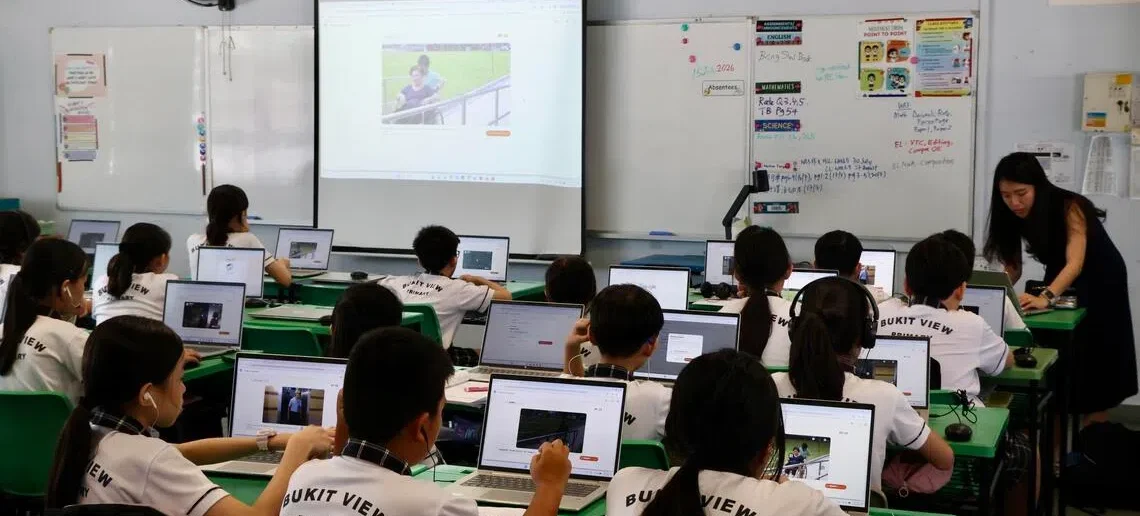
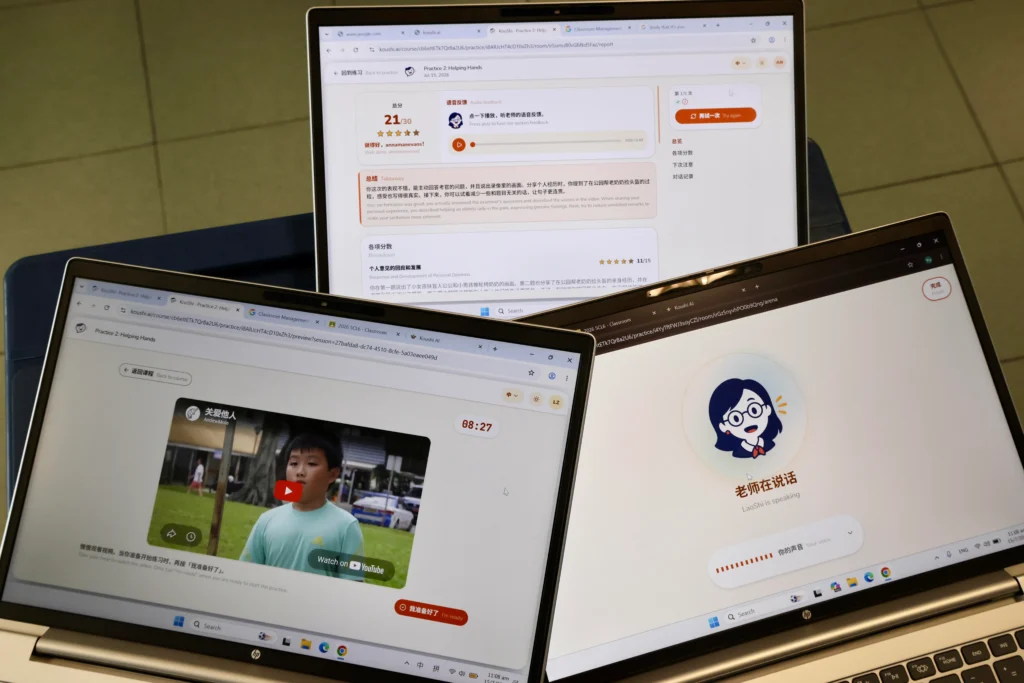
On 16 July 2026, AICET’s newest AI platform – KouShi – was featured in a Lianhe Zaobao article spotlighting how the tool is helping students prepare for PSLE Chinese Oral Examinations. Co-developed with Chinese language teachers, KouShi is currently being trialed by teachers from around 30 schools, and can respond to students’ spoken answers in real time — following up dynamically the way a real oral exam examiner would.
From a Parent’s Challenge to a National Trial
Prof. Ben Leong, Director of AICET, shared that the idea for KouShi grew out of his own experience helping his child prepare for the PSLE oral component, where he observed how much of a hurdle the exam can be for households that don’t speak Mandarin at home. While some schools already use the built-in AI features on the Student Learning Space (SLS) for oral practice, most of these tools are limited to text-based feedback and cannot sustain a genuine back-and-forth conversation. Advances in multimodal voice AI have now made it possible for platforms like KouShi to understand spoken responses and respond with relevant follow-up questions, giving students more opportunities to practise speaking aloud and to grow familiar with the natural rhythm of a real oral exam.
Building an AI That Can Examine, Not Just Respond
Dr. Shubham Sahai, who leads the KouShi development team, explained that the biggest challenge was designing an AI that could function as a credible oral examiner rather than simply generating a fixed response to an input. KouShi needed to genuinely listen to each student’s answer, judge its quality, decide on an appropriate next question, and sustain a natural conversational flow, before finally offering clear, bilingual feedback on how the student could improve.
Co-Developed and Tested With Schools
Chinese language teachers from six primary schools contributed to developing and testing the platform, helping refine its assessment criteria to better align with PSLE requirements and shaping a teacher dashboard that tracks students’ progress across practice attempts. The development team also drew on materials from local publishers and SEAB to keep practice sessions and feedback aligned with actual exam expectations.
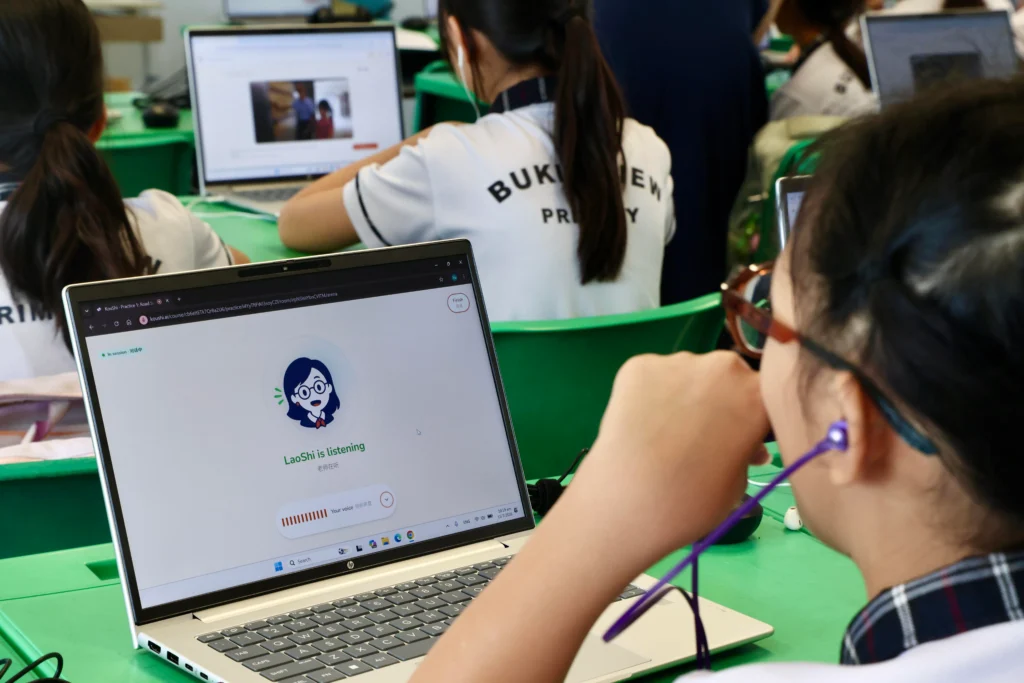
At Bukit View Primary School, whose teachers were part of the development and testing team, two Primary 5 and 6 classes are currently trialing the platform. Principal Teo Eng Hui shared that the school’s teachers contributed design feedback — including the suggestion to add spoken feedback — and noted that KouShi complements the school’s existing use of SLS by giving students the chance to engage in sustained, interactive spoken practice based on video scenarios, rather than just text-based responses. She added that where students previously had only two to three one-on-one oral practice sessions with a teacher per term, they can now practice far more frequently, reflecting on their own performance through the platform’s feedback and conversation transcripts, or learning from peers, while teachers continue to guide instruction and monitor each student’s progress.
KouShi remains complimentary during its current trial phase. While the team may explore a paid tier in future, Prof. Leong has indicated plans to keep the platform free for students under schemes such as the MOE Financial Assistance Scheme (FAS).