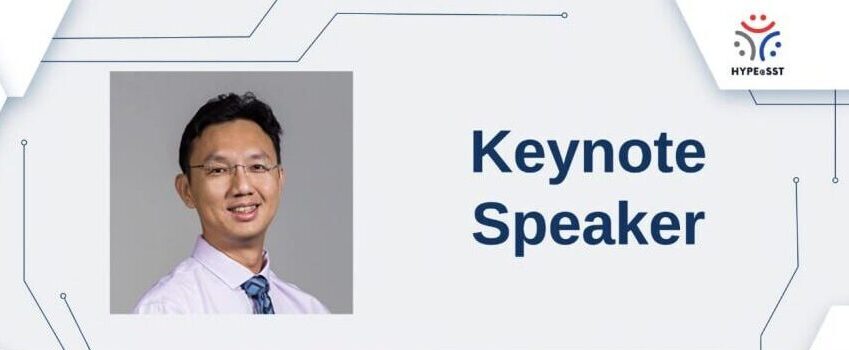
On 31 July 2026, AICET Director Prof. Ben Leong delivered a keynote at HYPE@SST 2026 (Humanities Youth Perspective and Engagement), a virtual session themed “AI in Education: Boon or Bane?”. Framed as “what I would tell myself if I were your age”, Prof. Ben’s talk spoke directly to the students in the audience, sharing a personal take on how AI is reshaping learning, work, and what young people should focus on developing over the years ahead.
Cognitive Offloading and the “Copilot vs Autopilot” Problem
Prof. Ben opened by naming a temptation familiar to any student: using AI to simply do one’s homework. He offered students questions to ask themselves before reaching for AI on any task:
Do I actually need to learn how to do this myself, and if not, am I using GenAI to do what I don’t want to do, rather than what I’m not able to do at all?
To illustrate his point, he used a “Copilot vs. Autopilot” analogy. When humans and AI collaborate, the results surpass what AI can do on its own. But treat AI like an autopilot—bypassing genuine human judgment—and you get no extra value. The core issue isn’t intelligence; it’s a matter of discipline and self-regulation.
Will There Still Be Jobs?
Turning to student anxieties about work, Prof. Ben addressed a common question directly: should you still learn to code? Rather than a simple yes or no, he pointed to a wider structural concern — citing a widely-discussed remark that roughly 1.2 billion young people across emerging markets will become job-eligible over the next 15 years, against an estimated 400 million jobs likely to be created in those same economies. His direct response: there simply won’t be enough jobs to go around for everyone, and no individual choice of subject or skill fully insulates against that reality. At the same time, he encouraged students not to over-optimise their choices around employability alone: urging them, if unsure, to follow their interests and study what they genuinely enjoy while still in school.
What Should You Learn?
On preparing for this future, Prof. Ben’s advice centred on a few durable habits over any specific technical skill: learning how to learn, distinguishing “doing the thing right” from “doing the right thing”, and asking good questions in the first place — noting that the honest answer to almost any question today is “it depends”. He urged students to get comfortable with ambiguity and to focus on craftsmanship, drawing on the documentary Jiro Dreams of Sushi to illustrate how mastery of a craft often demands real sacrifice and years of deliberate practice.
Prof. Ben closed with a line that tied the whole talk together: anything AI can already do well is, by definition, an easy problem — and the truly hard problems worth preparing for are people problems, not technical ones. The session gave HYPE@SST’s student audience a candid, personal perspective on navigating an AI-driven future, encouraging them to focus less on competing with AI on technical tasks, and more on developing the human judgment, character, and interpersonal skills that remain distinctly theirs.