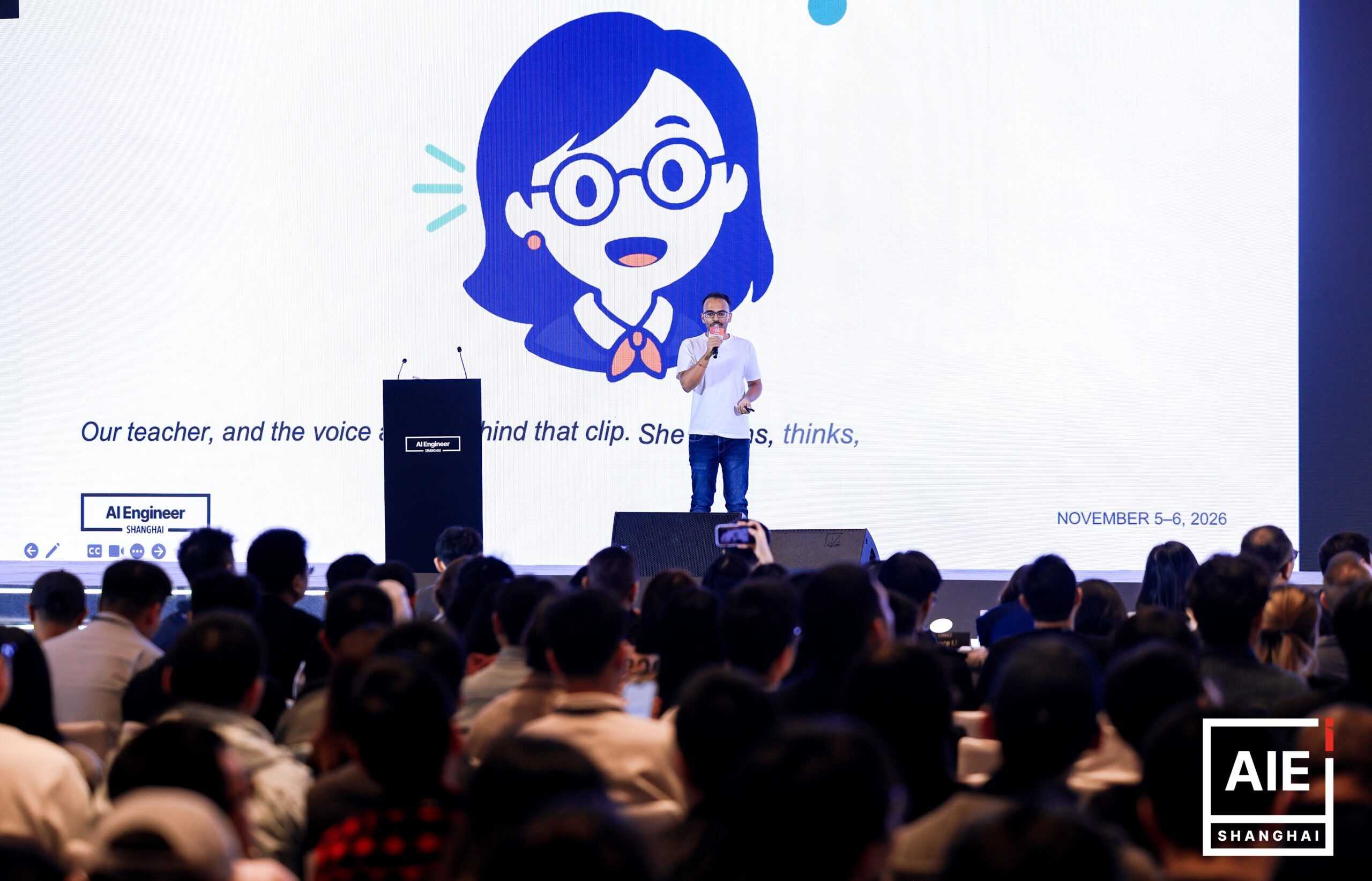
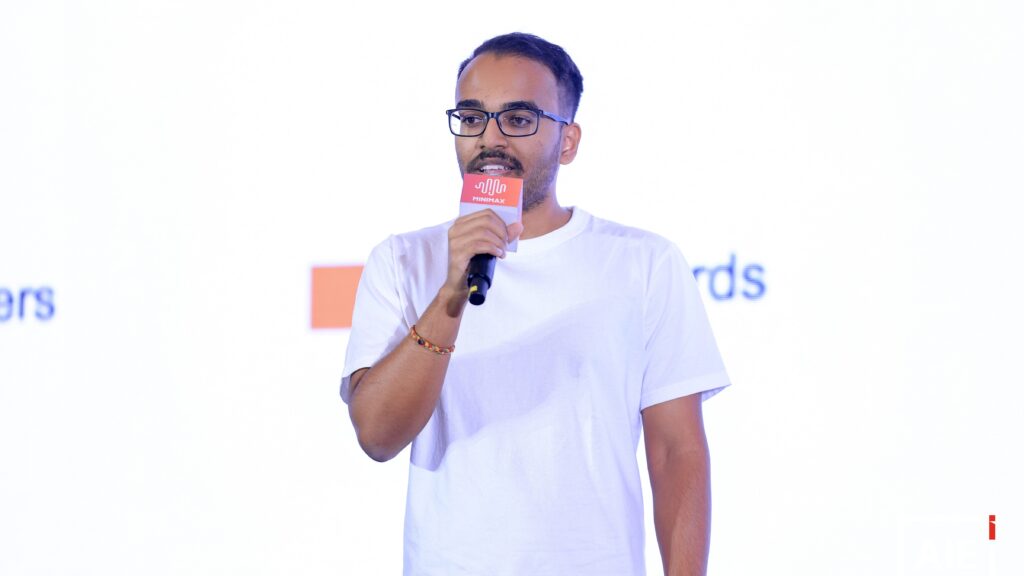
On 5 and 6 November 2026, AICET joined about 1,600 developers, researchers and practitioners at AI Engineer Shanghai, the first edition of the AI Engineer conference series held in China. AICET was represented by Satvik Sinha, Yang Hui Ting and Karina Yuen, with Satvik presenting a talk on streaming speech-to-text drawn from the team’s work on KouShi.
Engineers from East and West in one room

Held at the Hilton Shanghai Hongqiao, the two-day conference brought together more than 50 speakers from leading AI labs and companies in both East and West. Engineers shared how they build AI products in practice, what has worked, and what has not.
The program was organised around two themes. The first day focused on open models, agents and infrastructure, with talks such as Microsoft’s From Models to Working Enterprise Agents, StepFun’s From Model Intelligence to Agent Harness: Enabling Long-Horizon Agents, and You.com’s account of post-training an open model to search and browse the web. An afternoon breakout covered AI applications, from agent verification for mobile apps at Instagram to managing large fleets of agents in the enterprise.
The second day turned to world models, physical AI and AI-native products. World Labs opened with Taxonomy of World Models, followed by sessions on robot foundation models, persistent 3D worlds for physical AI, on-device decision models from Liquid AI, and home service robots. Voice AI also featured, including a Daily.co talk on evaluating a bilingual English–Mandarin voice agent.
What 3,000 live sessions taught us about speech-to-text
On the morning of 6 November, Satvik presented The Good, the Bad and the Ugly: What 3,000 live sessions taught us about streaming speech-to-text on the main stage. The talk drew on AICET’s experience building KouShi, which uses streaming speech-to-text to transcribe students’ spoken Mandarin practice in real time.
Speech-to-text is often treated as a solved problem, and models that score well on public benchmarks can appear ready for any use case. When the team reviewed its own sessions, however, it found that about one in four transcripts contained words the student had never said. A streaming model was inserting Korean, Hebrew and Thai into Mandarin answers. When the same recordings were transcribed after the session, the results were almost perfect.
To understand why, the team built a replay rig that fed recordings from real sessions into four different models under the same conditions. This led KouShi to switch its production model, but the change alone did not explain every error. Satvik walked the audience through the investigation that followed, including the two settings that had the greatest effect on streaming accuracy and how much each one improved results.
The practical message for developers was that benchmark scores are not a substitute for testing on their own users’ audio, and that streaming models can be tuned to raise accuracy for a specific use case.
Exchanging ideas beyond the stage
Between sessions, Satvik, Hui Ting and Karina spoke with engineers and researchers working on voice AI, open models and agents, and exchanged notes on the practical challenges of deploying AI in real settings. These conversations will inform AICET’s continued work on KouShi and its other AI platforms for education.