On 13 November 2026, AICET took part in the International Workshop on Computing Education in the AI Age, organised by the College of Computing and Data Science (CCDS) at Nanyang Technological University (NTU). Held at NTU's Tan Chin Tuan Lecture Theatre, the full-day workshop brought together educators, researchers and industry practitioners to examine how AI is reshaping the teaching of programming and software engineering.
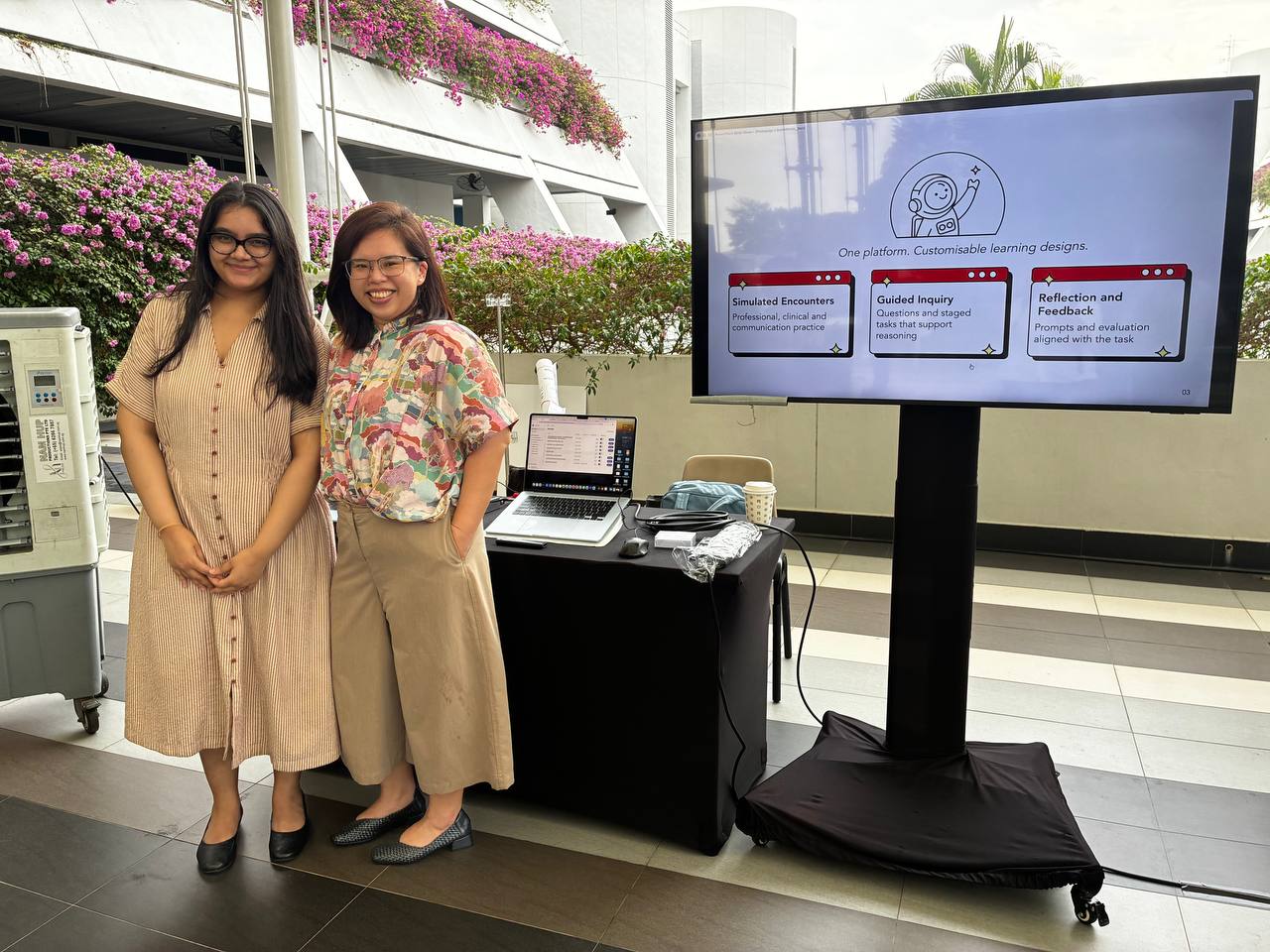
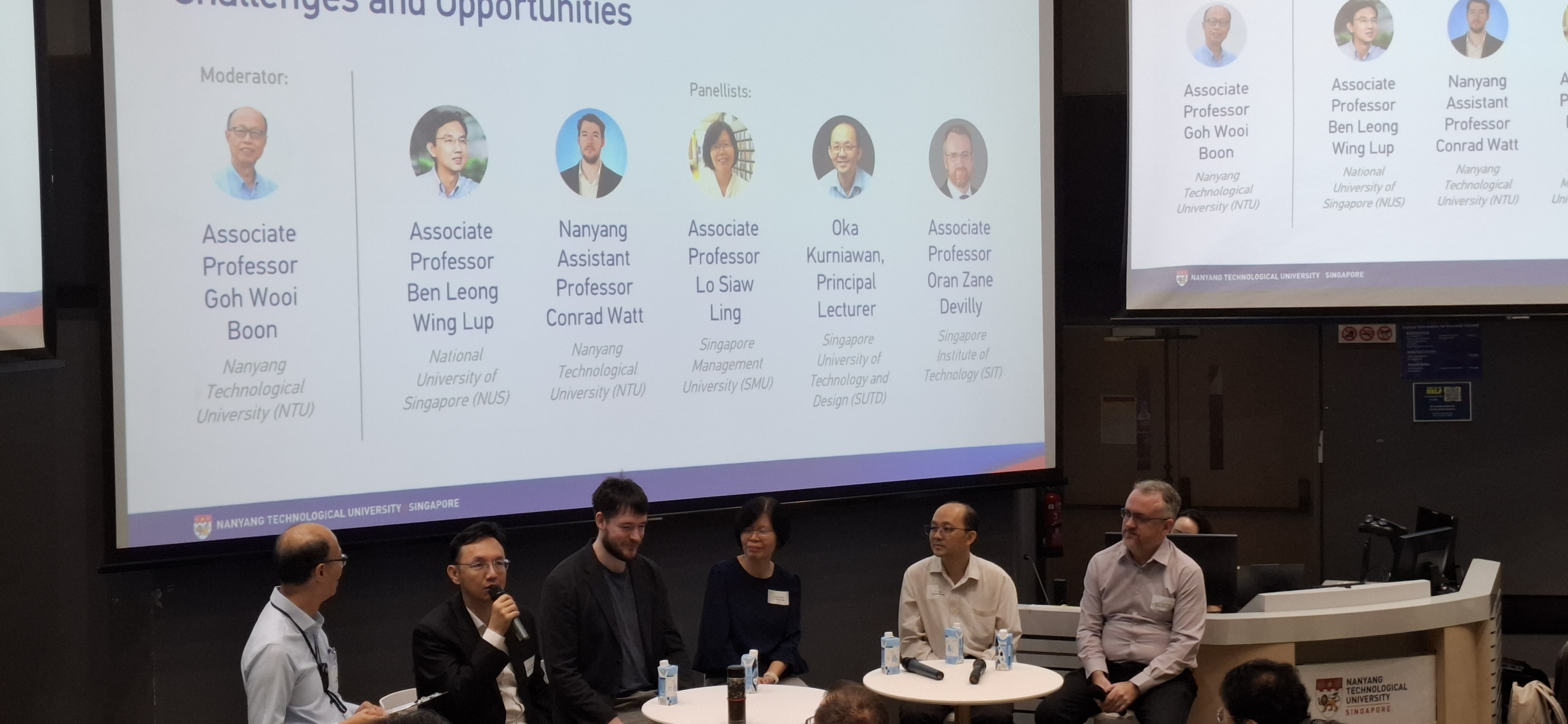
AICET Director Prof. Ben Leong delivered a keynote address at the workshop, while two members of AICET's pedagogy team, Geraldine Tan and Pragya Chandel ran an interactive demo station for ScholAIstic, AICET's Agentic AI Learning Platform, during the event's Interactive Showcase.
Keynote: "Not Broken, but At Risk"
In his keynote, titled "Not Broken, but At Risk: Computing Education in an AI-Driven Future", Prof. Ben drew on more than 20 years of teaching undergraduates at NUS, as well as conversations with engineering managers in big tech and recent graduates now working in industry.
What worked before AI
Prof. Ben began with a reassuring observation. Graduates who learnt to program before generative AI tools were available now use AI daily in their work, and they are coping well. By that measure, computing education is not broken: whatever educators were doing before evidently worked.
The difficulty, he explained, is that today's students learn in an environment that educators can no longer control. He pointed to a 30-month study of 26,811 secondary school students in China, which found that AI adoption raised homework scores by 18 per cent while closed-book examination scores fell by 20 per cent within six months. Every visible signal improved, while the underlying learning got worse. Prof. Ben noted that a similar trend is emerging among undergraduates.
A problem of discipline, not knowledge
Prof. Ben argued that computing education now faces a behavioural problem rather than a technological one. Survey data show that most students believe AI harms their critical thinking, yet they continue to use it for their homework. Because students know the risks and use AI anyway, he suggested that AI literacy campaigns alone will not be enough. He framed the challenge as one of discipline and self-regulation, adding that teaching is fundamentally the business of managing motivation.
He also highlighted the risk of "never-skilling", where learners who rely on AI during their formative years fail to develop foundational skills in the first place. At the same time, the gap between students is widening: stronger students appear to use AI to learn more effectively, while weaker students fall behind.
Judgement over code production
Turning to industry, Prof. Ben observed that vibe coding has reduced the number of engineers needed to ship software, and entry-level hiring has contracted sharply. The market is increasingly paying for judgement rather than code production, which is precisely the capability students risk outsourcing to AI. Using AI well, he noted, requires better judgement, not less.
Prof. Ben also shared how AI can be used to teach and assess human skills that are traditionally difficult to teach at scale, such as leadership. He described a coaching role-play exercise he uses in his own leadership course, built around a structured coaching model to encourage reflection and metacognition, and emphasised that while anyone can build a chatbot, effective learning tools need sound pedagogy behind them.
Interactive Showcase: ScholAIstic
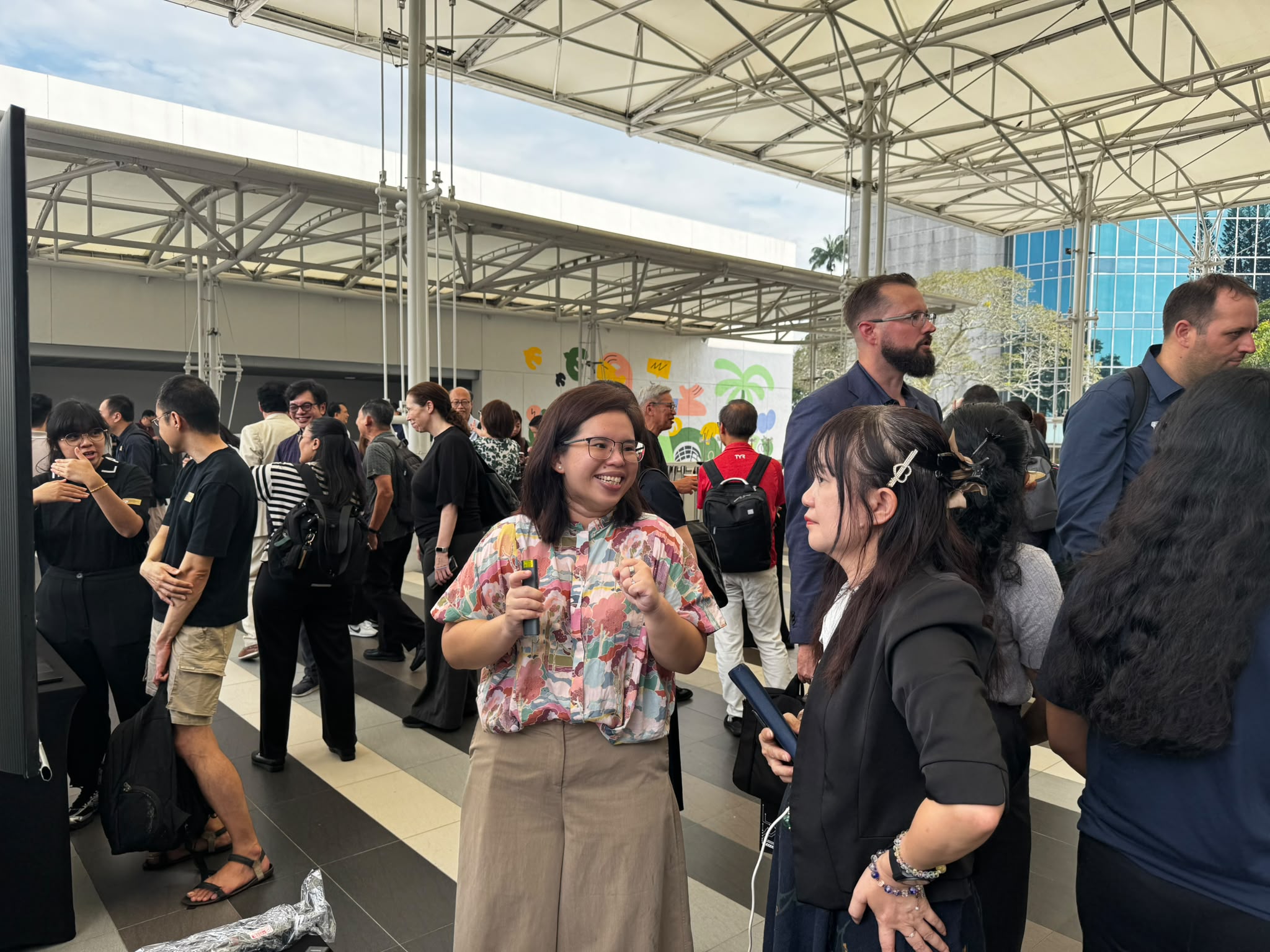
At the workshop's Interactive Showcase, Geraldine Tan and Pragya Chandel from AICET's pedagogy team hosted an interactive demo station for ScholAIstic, AICET's Agentic AI Learning Platform.
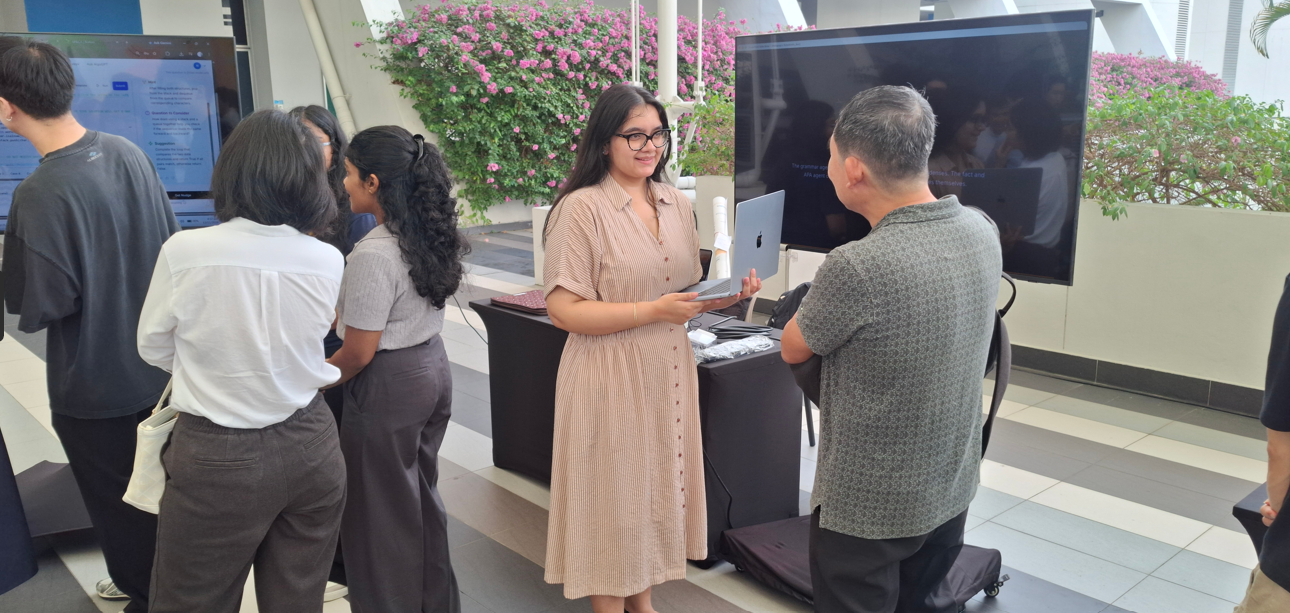
ScholAIstic lets learners practise through interactive, conversation-based simulations. At the station, workshop participants tried the platform for themselves and spoke with the team about how such simulations can be designed and used in teaching. The demonstrations complemented a key message of the keynote: that AI, when paired with sound pedagogy, can help teach and assess skills that are otherwise difficult to develop at scale.
Looking ahead
AICET thanks NTU's College of Computing and Data Science for organising the workshop and for the opportunity to contribute to the discussion. As AI continues to reshape how students learn, AICET looks forward to working with fellow educators and institutions on the open problems raised at the workshop, and to developing AI-enabled learning tools grounded in sound pedagogy.