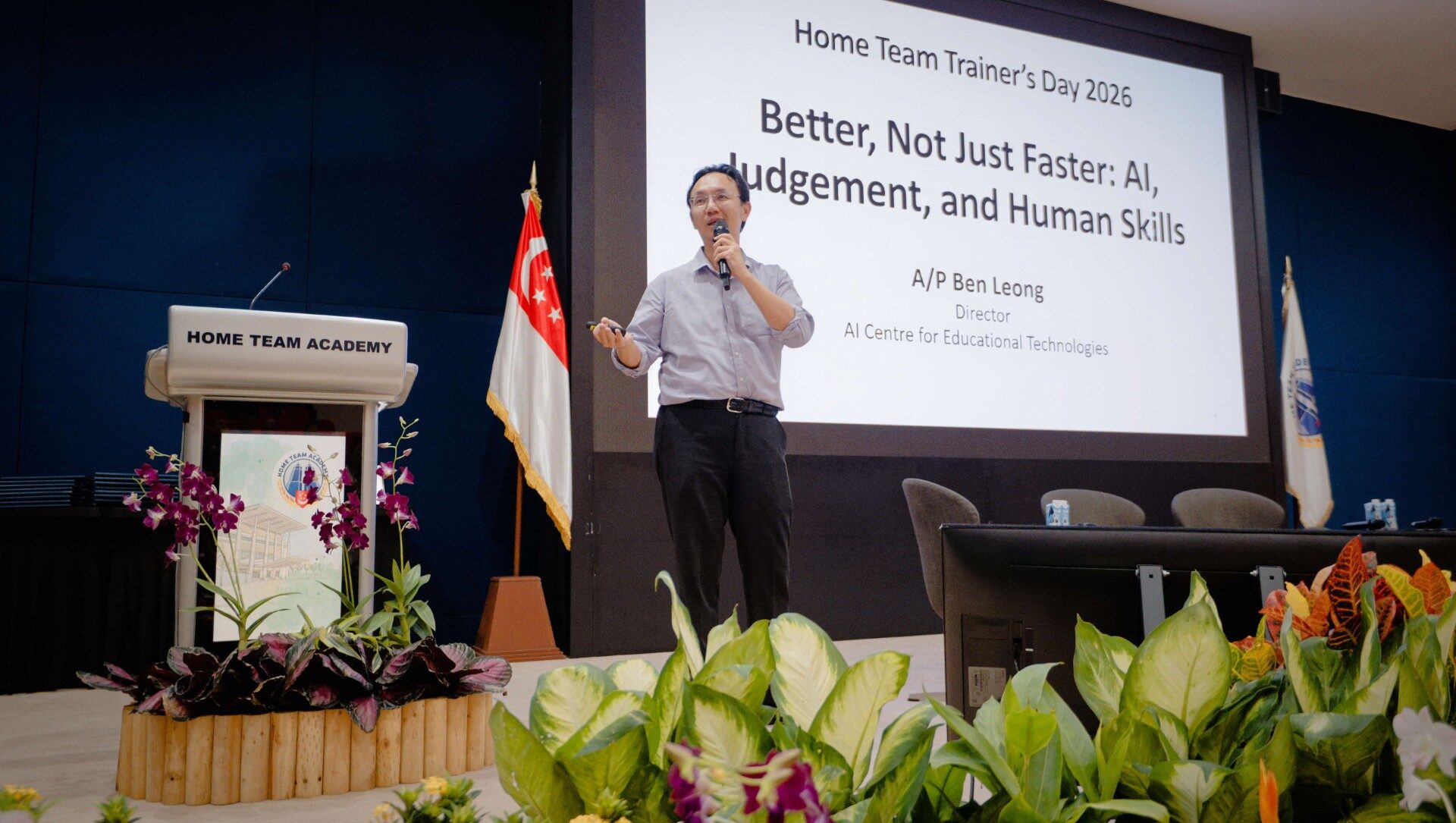
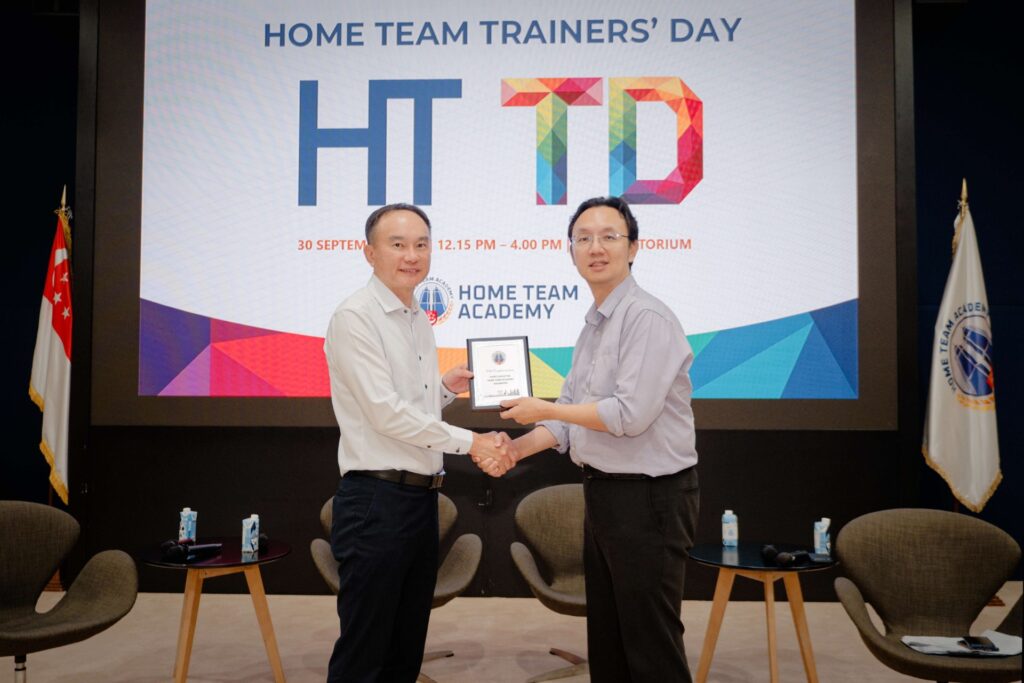
On 30 September 2026, Prof. Ben Leong, Director of the AI Centre for Educational Technologies (AICET), delivered a sharing at Home Team Trainers’ Day 2026, organised by the Home Team Academy’s (HTA) Centre for Learning Systems. Titled “Better, Not Just Faster: AI, Judgement, and Human Skills”, the session examined how generative AI affects the way people learn, and what this means for trainers preparing officers for work where sound judgement is essential.
What the evidence suggests
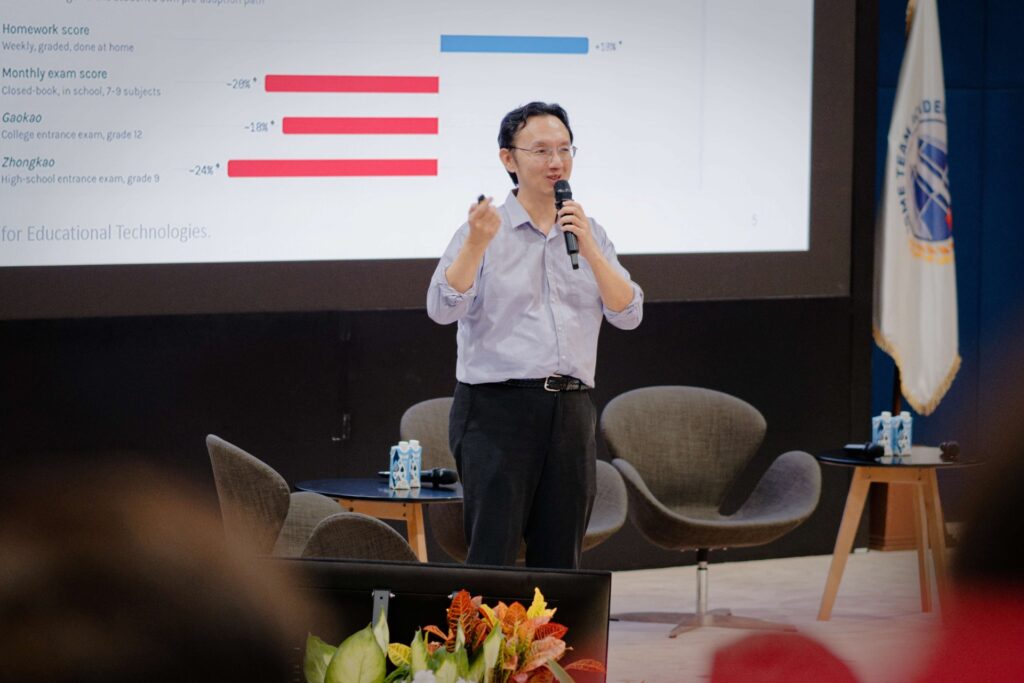
Prof. Ben began by pointing to growing evidence that relying on AI can come at a cost to learning. He shared a recent study by researchers from Stockholm University and the University of Hong Kong, which followed more than 26,000 secondary school students in China over two and a half years and pointed to a possible “learning penalty” from using generative AI.
He also drew attention to a concern raised in medical education, termed “never-skilling”. Unlike deskilling, where experienced practitioners lose skills they once had, never-skilling describes trainees who rely on AI early in their training and never develop the foundational reasoning that independent practice requires. As the authors of that perspective note, AI is not inherently harmful to learning; its impact depends on how and when it is introduced.
Prof. Ben described the resulting risk as the “AI chasm of death”: the gap that opens when learners use AI to skip the stages through which novices normally become experts.
Judgement as the deciding factor
At the same time, Prof. Ben described AI as a force multiplier: it amplifies whatever its user brings to the task. Someone with good judgement who uses AI well can achieve far more than before. Someone with poor judgement who relies on AI can produce large volumes of low-quality output, faster than ever.
The key, he argued, is to focus on domain mastery. Practitioners need deep knowledge of their field to judge when AI output is right, when it is wrong, and when it should not be used at all. AI should serve as a copilot, not an autopilot.
For training, this translates into two principles:
- Build baseline competence without AI first.
- Introduce AI only under supervision thereafter.
Using AI to train human skills
Prof. Ben observed that the skills AI handles well, such as arithmetic and vocabulary, also tend to be the easiest to teach and assess. Human skills such as leadership, creativity, social and emotional skills, and public speaking are harder for AI to perform, and harder to teach and assess. These are also the skills that matter most for officers.
He suggested that AI can help close this gap by giving learners a space to practise these skills. While anyone can build a chatbot today, he stressed that an effective training tool must be grounded in sound pedagogy.
To illustrate, he demonstrated an AI coaching simulation in which participants practise coaching “Jane”, a colleague who is feeling overwhelmed at work. The exercise is structured in five stages:
- Initial meeting: Explore Jane’s situation and build trust.
- First reflection: Process the situation and plan an approach.
- Continued meeting: Guide Jane to arrive at her own solution.
- Second reflection: Self-evaluate coaching effectiveness.
- Evaluation: Receive AI-generated feedback and suggestions for improvement.
The structured reflection stages ensure that the learner, not the AI, does the thinking, with the AI providing a realistic practice partner and feedback.
Questions for Home Team trainers
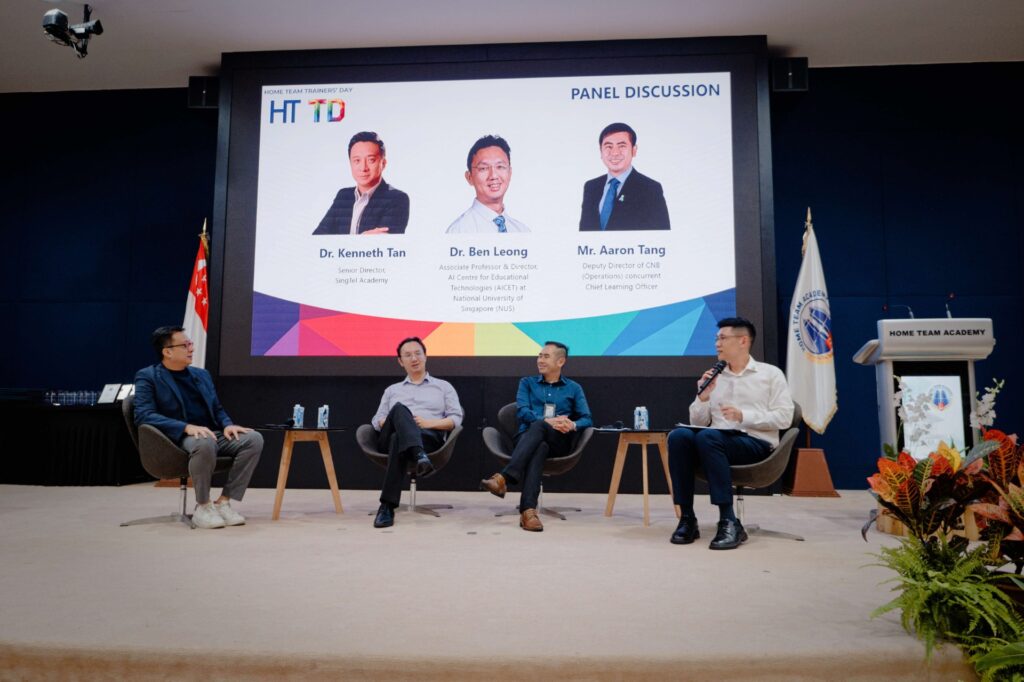
Prof. Ben concluded with two takeaways: beware never-skilling, because deep domain knowledge matters; and use AI to train human skills. He left participants with two questions to consider for their own programmes:
- Given the risk of cognitive offloading, where should AI be restricted in Home Team training?
- Beyond coaching, which other human skills should AI be used to help develop?