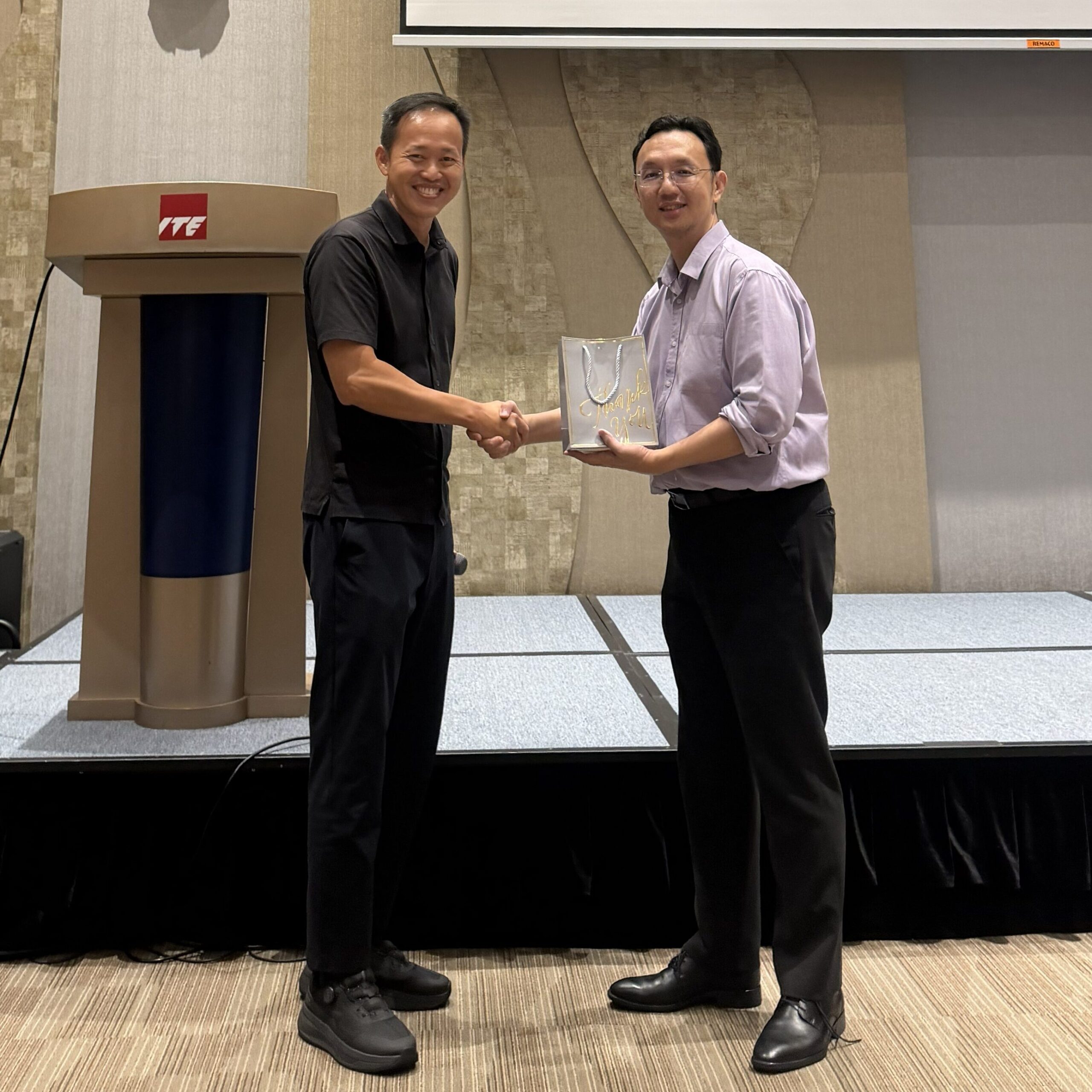
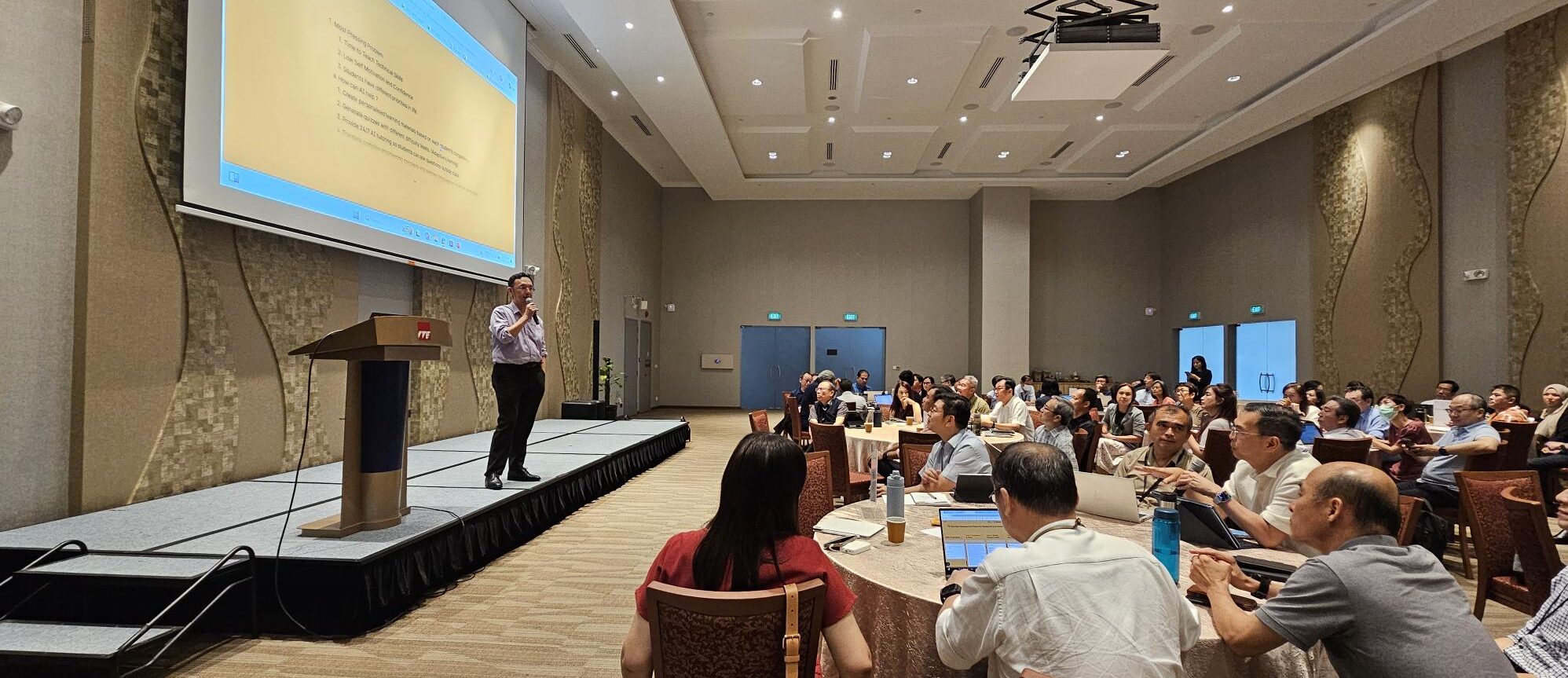
On 23 July 2026, AICET Director Prof. Ben Leong conducted a workshop for senior management and academic leaders at the Institute of Technical Education (ITE), held at ITE Headquarters in Ang Mo Kio.
Centered on the theme “Deploying AI to Prepare Our Students for an AI-Driven Future,” this workshop builds on a collaboration initiated during ITE’s visit to AICET on 13 March 2026. Following a successful pilot of SoftMark in ITE’s General Education programme, senior leadership invited Prof. Ben back to share his insights, drawing on his dual background as an educator and technology professional.
Inside the Session
Prof. Ben opened by setting three learning objectives for the session: understanding what it means to be an AI-ready educator, applying AI meaningfully in one’s own work, and drawing inspiration to work not just harder, but better.
He then worked through what AI’s growing presence means for learning and teaching. Drawing on recent research and commentary, he cautioned against equating more screen time or heavier AI use with better outcomes on its own, citing Organisation for Economic Co-operation and Development (OECD) findings that both excessive digital leisure and excessive digital learning time are associated with weaker mathematics performance. He introduced the idea of an “AI chasm of death,” where over-reliance on AI tools without underlying skill leaves people stuck between novice and expert, unable to bridge the gap.
When it comes to what we should actually teach, Prof. Ben urged a shift toward human-centric capabilities: leadership, emotional intelligence, creativity, and effective communication. Because these soft skills and hands-on crafts are precisely what AI handles poorly, and what algorithms cannot easily replace. He framed vocational expertise and disciplined craftsmanship not as outdated traditions, but as essential safeguards in an automated world.
On competition, he raised a critical point: Singapore’s students are competing against the most capable talent in lower-cost markets, now supercharged by AI. He framed this alongside macro labor pressures, pointing to the expanding mismatch between the sheer volume of global youth entering the workforce and the market’s capacity to absorb them.
Prof. Ben structured his key takeaways on AI deployment around five lessons:
- Organisations need to give people real time and resources to adopt AI properly — treating it as a people problem, not just a technology one.
- AI does not automatically improve productivity; judgment and domain expertise matter more, not less, once AI enters the picture.
- Hallucination is becoming a solved problem, but model bias remains a genuine concern — he cited research showing AI models rating resumes rewritten by themselves more favourably than human-written ones.
- AI does not remove personal accountability — responsibility can be delegated, but accountability cannot.
- Leaders should stay alert to real risks: de-skilling (or “never-skilling,” where those who rely on AI early never build the underlying reasoning skills at all), the tendency for agreeable AI responses to make people less willing to take responsibility or reconsider their position, and the risk of AI-driven burnout from constantly expanding workloads rather than reduced ones.
He closed this section with a caution against chasing efficiency for its own sake, arguing instead for excellence, using time freed up by AI to produce better work, not simply more of it.
Prof. Ben also shared examples of AICET’s own work supporting this shift, including its consulting arm launched in July 2024, which since AY24/25 has helped bring ScholAIstic to more than 20 courses across 10 NUS faculties and schools, reaching over 1,700 students through role-play based, competency-focused learning tools in areas including nursing, law, and social work.
He closed the talk on a personal note, reminding participants that however AI reshapes the mechanics of teaching, the work remains fundamentally about heart.