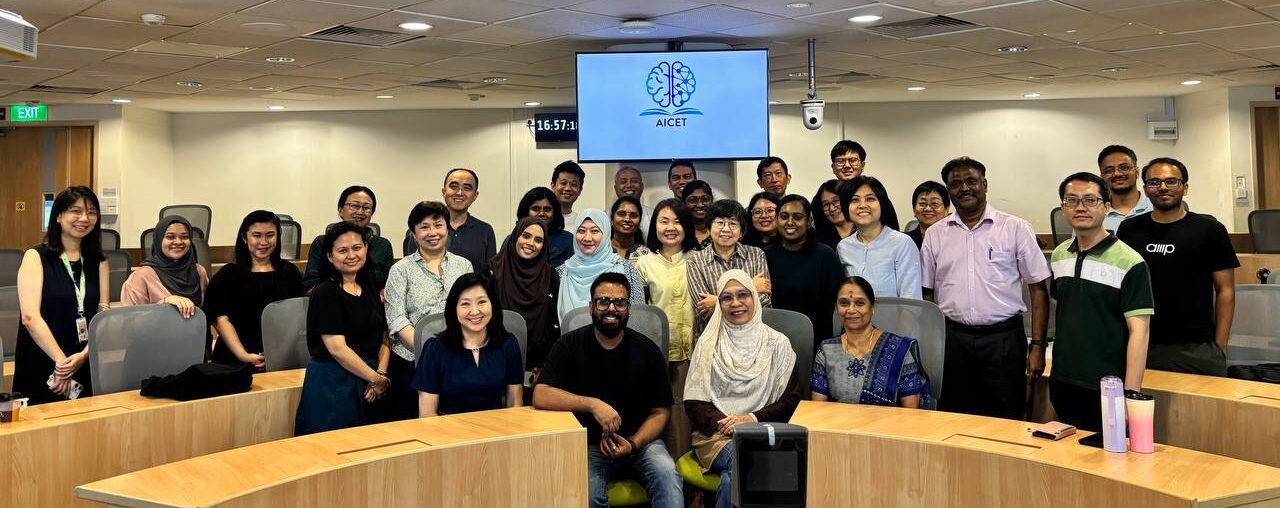
On 15 October 2026, AICET welcomed a delegation from the Mother Tongue Languages Branch (MTLB) of the Ministry of Education (MOE), Singapore. The visit was an opportunity to talk about how AI can support language learning, especially speaking practice, and to give the delegation hands-on time with one of AICET’s newest platforms.
Designing AI Around How Students Learn
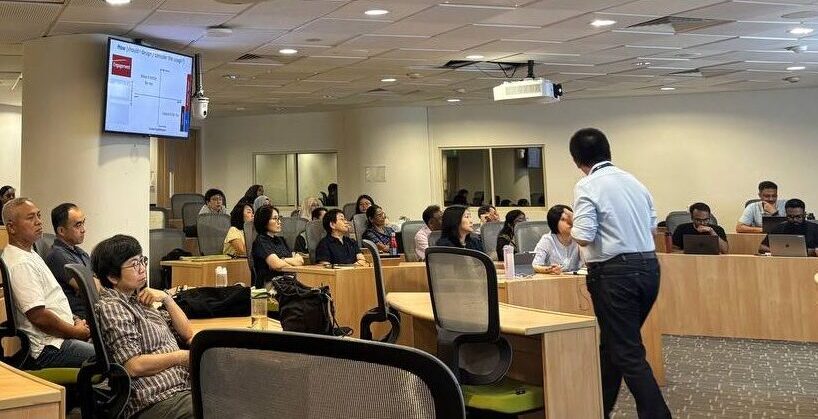
The session opened with a presentation by Prof. Soo Yuen Jien, Deputy Director (Pedagogy and Research), AICET. Prof. Soo started from a simple principle that guides AICET’s work: if educators already understand how to teach something well, that pedagogy can be translated into how an AI tool behaves. If they do not, AI will not supply the answer. At AICET, we believe that technology does not replace sound teaching. It helps scale and strengthen it.
He illustrated this with AICET’s experience in using rubrics to generate automated feedback on student answers. AI feedback was most accurate for clearly scoped questions. Instructors also rarely got their rubrics and instructions right on the first attempt. The best results came from keeping teachers in the loop and refining rubrics over several rounds, with checks to make sure earlier accurate feedback did not regress.
Of particular relevance to the delegation was a German language course at NUS, build on AICET’s platform ScholAIstic. There, AI simulations of everyday situations gave students more chances to practise speaking than large classes and limited contact hours allow. The scenarios ranged from casual conversations to formal service interactions. Students practised using the right tone and register, reviewed feedback, and tried again. This gave them a safe, low-pressure space to build both fluency and confidence.
Prof. Soo closed by noting that AI works best as a force multiplier for people with real judgement and subject expertise, and that teachers remain at the heart of improving education.
Hands-On with KouShi
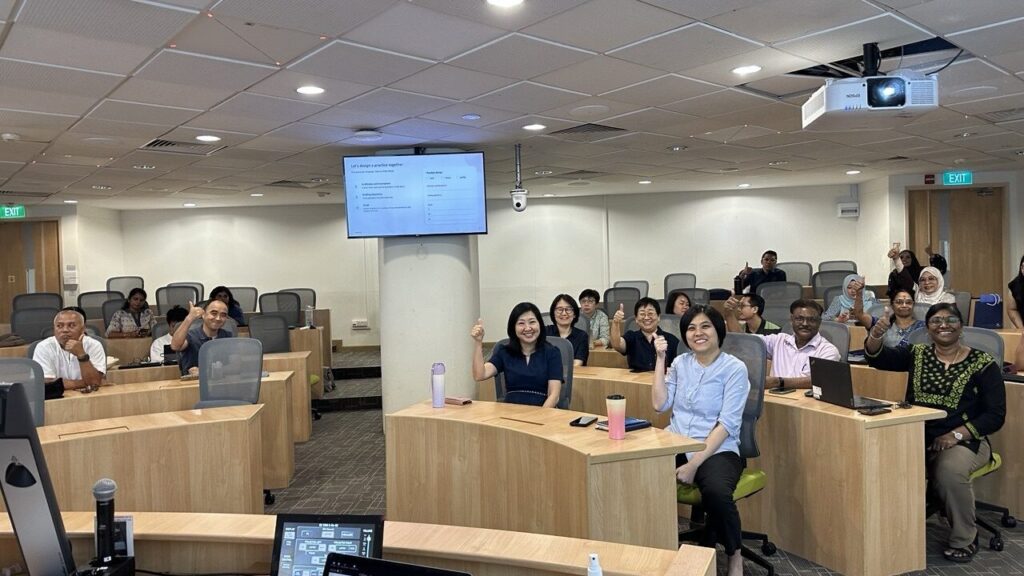
The second half of the session was an interactive workshop led by AICET’s KouShi team: Shubham Sahai, Umair Ahmed, Satvik Sinha, and Markus Yeo. KouShi is AICET’s AI-powered oral practice platform. It helps primary school students prepare for their PSLE oral examinations by giving them realistic, on-demand speaking practice with immediate feedback. It is built around the two components of the PSLE Mother Tongue oral examination: reading aloud and stimulus-based conversation. In the conversation component, students respond to a short video or picture and hold a live, two-way exchange with LaoShi, KouShi’s AI teacher. LaoShi follows up on what each student actually says. Every attempt is scored against rubric criteria aligned to the exam, and each score comes with an explanation of what went well and what to work on next.
The team explained how KouShi fits into the classroom. Teachers decide the theme, stimulus, guiding questions and rubric emphasis, as well as when practice opens and closes. LaoShi handles the one-to-one speaking turns and reports back on every attempt, so teachers can spot students who need support early and decide what to reteach.
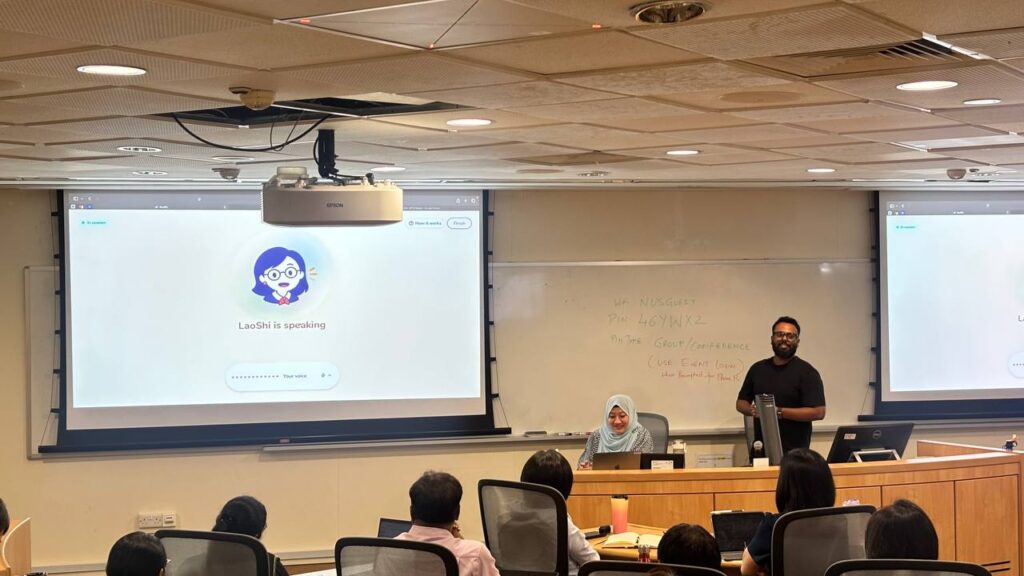
A Malay Language teacher volunteered to experience KouShi live during the demonstration, offering the audience a glimpse into how the platform supports oral practice and assessment. The session also highlighted one of KouShi’s key strengths: customisable assessment rubrics. Teachers can fine-tune the criteria and scoring to align with their teaching approaches and assessment expectations, ensuring that KouShi’s feedback reflects how they assess students in practice.
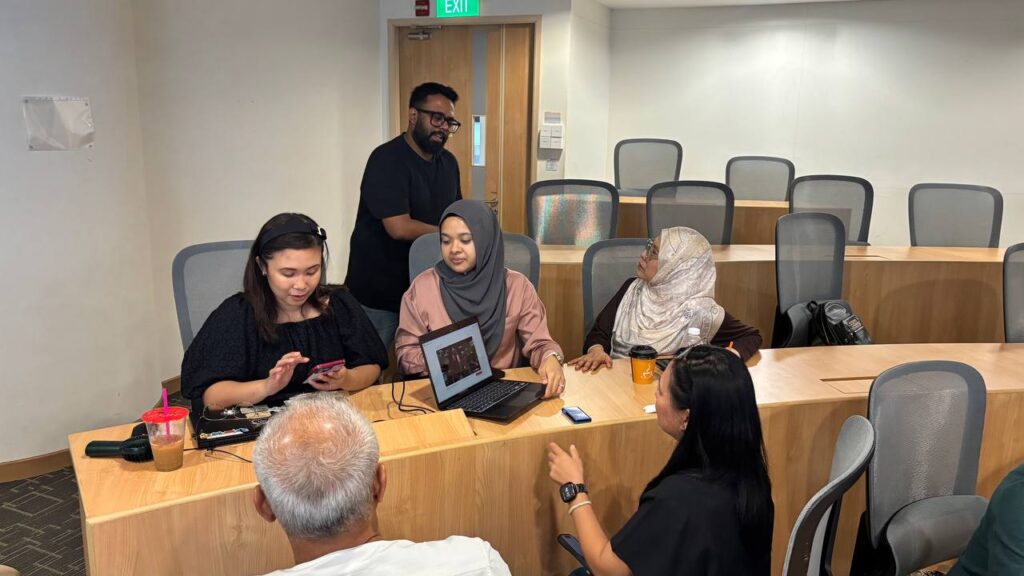
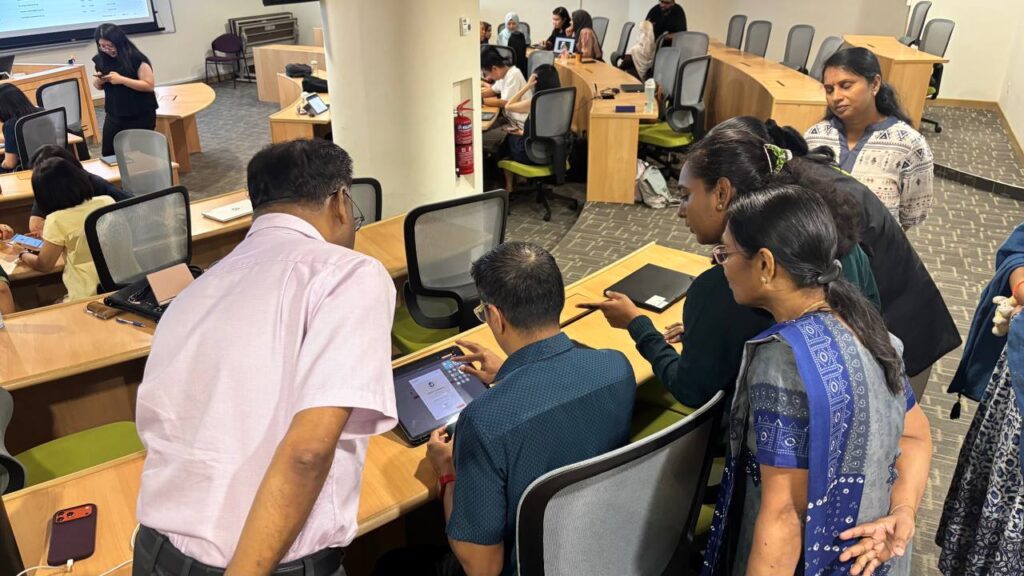
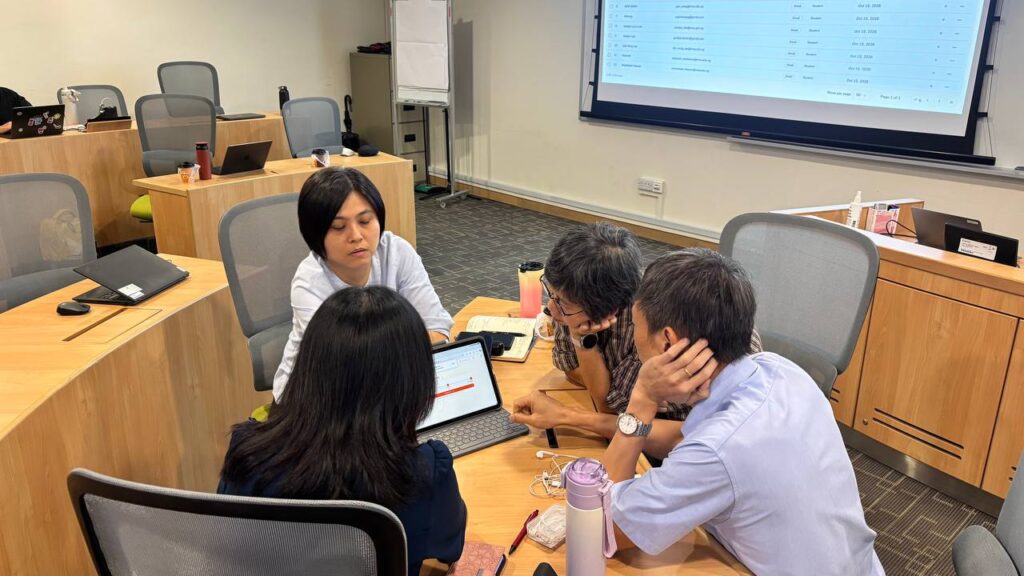
Delegates then took on the role of students. Working in small groups, they completed a practice in Chinese, Malay or Tamil and compared their reports, with one question in mind: would they have given the same score? Many of the delegates also tried to take LaoShi off-topic, which showed how the platform keeps conversations focused on the practice task. The discussion that followed touched on how the platform is tested before it reaches students, how student data is protected, and practical questions such as how to handle a student who answers fluently but mostly in English.
Looking Ahead
The visit ended with an open discussion about where AI-supported oral practice could make the most difference in Mother Tongue learning. AICET thanks the MTLB delegation for their time and thoughtful engagement, and looks forward to continuing the conversation.
Learn more about KouShi at koushi.ai, or read about its feature in Lianhe Zaobao on the AICET website.