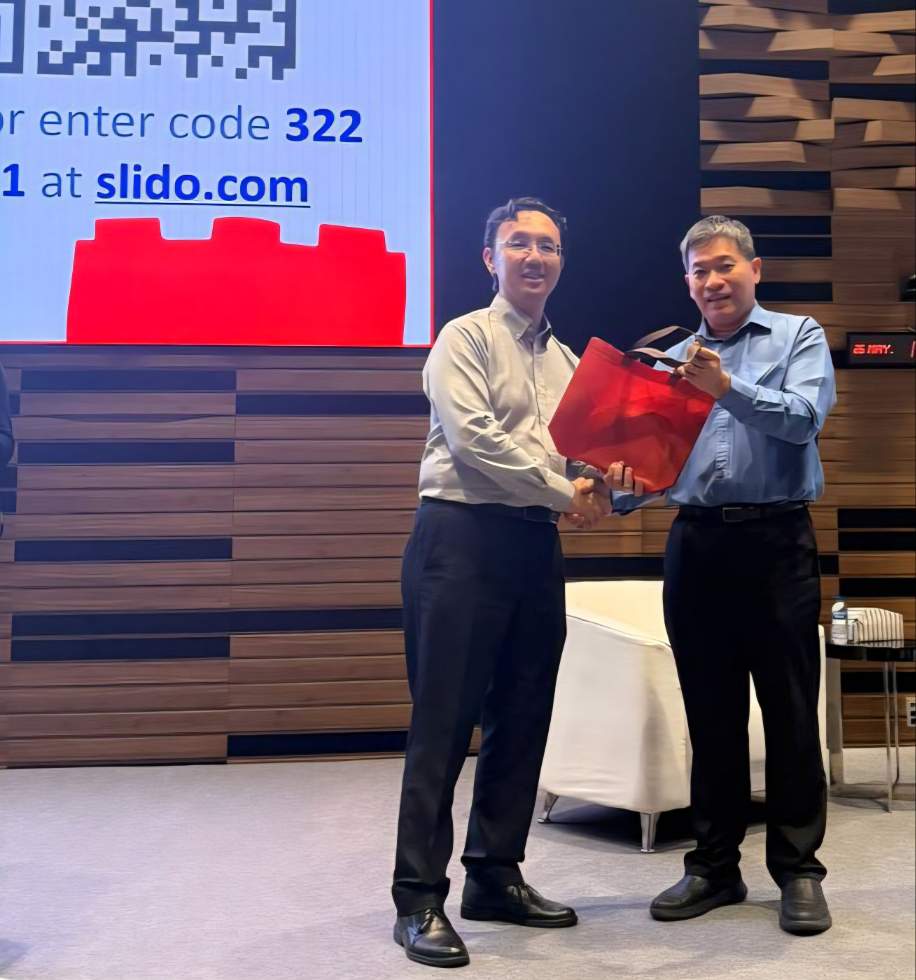
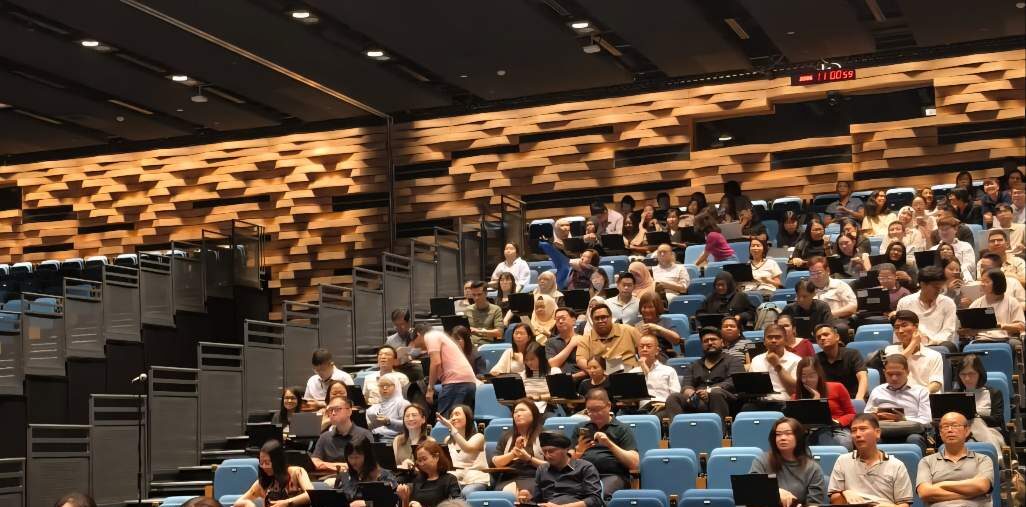
On 26 May 2026, AICET and the Ministry of Law conducted a workshop titled AI at Work: Navigating Opportunity, Risk and Judgment at Singapore Management University (SMU). The session was facilitated by Mdm Geraldine Tan and Ms Pragya Chandel, both EdTech Development Specialists from the AICET Pedagogy Team.
The workshop explored how Generative AI (GenAI) is rapidly transforming the modern workplace, while highlighting the importance of human judgment, critical thinking, and responsible AI use. Participants were encouraged to develop a balanced mindset towards AI adoption — recognising both its opportunities and limitations when applied in professional settings.
Key Takeaways
- How AI Has Evolved
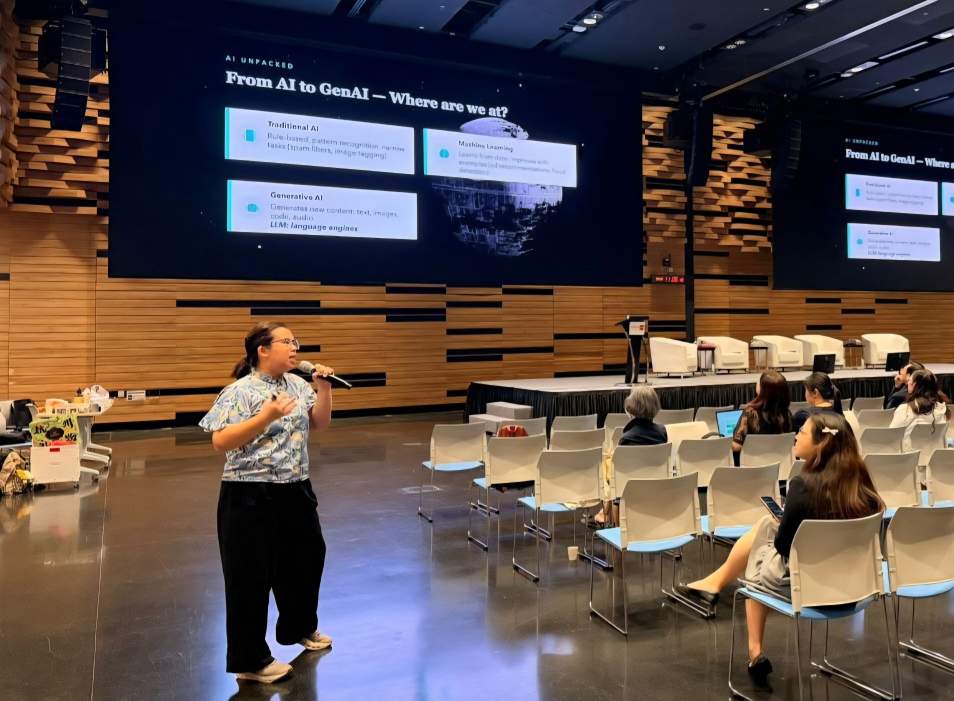
The session explored the rapid development of AI over the decades, from early machine learning systems to Large Language Models (LLMs) and today’s growing interest in AI agents and AI-powered workers. Participants gained a better understanding of how quickly AI capabilities are evolving and how these technologies may shape future workplace practices. - Understanding the Risks of AI
The workshop also highlighted the risks of over-relying on AI outputs. Participants discussed how Generative AI can sometimes produce inaccurate or misleading information despite sounding highly confident. The facilitators introduced the idea of the “certainty illusion” — where users may feel more confident in AI-generated responses than the evidence actually supports. Participants were reminded that AI should function like a GPS: useful for guidance, but with humans still in the driver seat exercising sound judgment.
A Decision-Making Framework for AI Use
Participants were also introduced to a practical decision-making framework that examined AI usage through the lenses of value and risk. The framework encouraged participants to think critically about when AI should be used, when additional human verification is needed, and when AI may not be appropriate at all. Tasks with high value but low risk were identified as suitable opportunities for AI adoption, while high-risk tasks required greater caution, accountability, and human oversight.
Interactive Activities
To help participants experience these concepts firsthand, the workshop included two hands-on activities.
- Activity 1: AI or Not?
Participants were shown a series of images and asked to determine whether they were real photographs or AI-generated visuals.
This activity served as an engaging icebreaker and demonstrated how rapidly AI-generated content has improved. It also encouraged participants to reflect on the gap between personal certainty and reality when evaluating digital information. - Activity 2: Prompt Engineering Exercise
Participants practiced writing and refining prompts to summarise articles, extract key points, and ask clarifying questions.
Through the exercise, participants experienced how prompt quality directly affects the usefulness, clarity, and reliability of AI-generated outputs in workplace contexts.
AI in the Public Sector
Prof Ben Leong from AICET delivered a special address on AI adoption within the public sector. He emphasised that successful AI implementation is ultimately a people and change management challenge, rather than simply a technological one. He also reminded participants that human judgment, accountability, and careful verification remain essential, particularly in high-stakes professional environments. Rather than adopting AI out of fear of missing out (FOMO), he encouraged public officers to approach emerging technologies with curiosity, flexibility, and discernment.
By anchoring these principles, AICET remains committed to supporting professionals in the legal and public sectors to engage with AI thoughtfully and responsibly — using technology to enhance work processes while maintaining sound professional judgment.