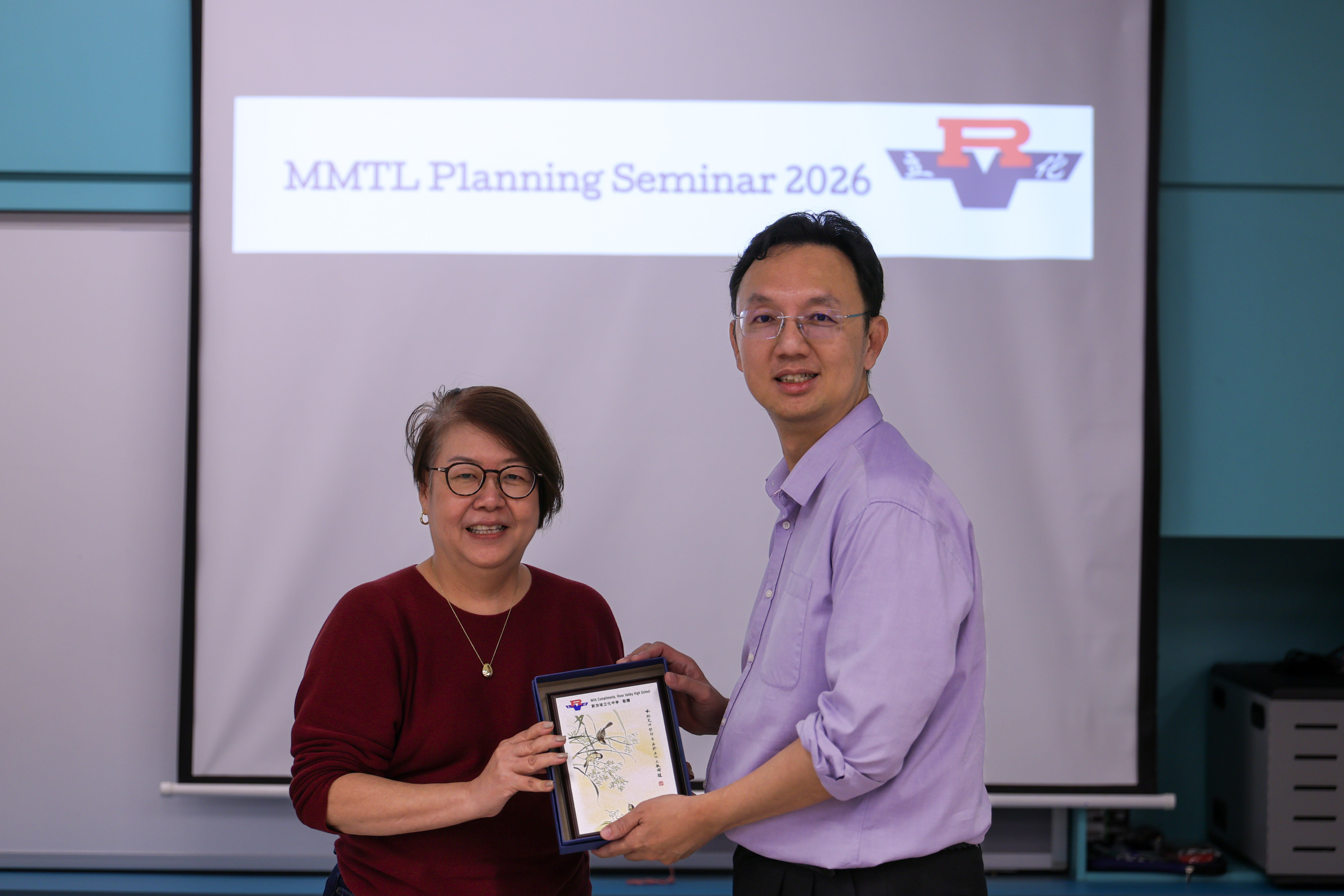
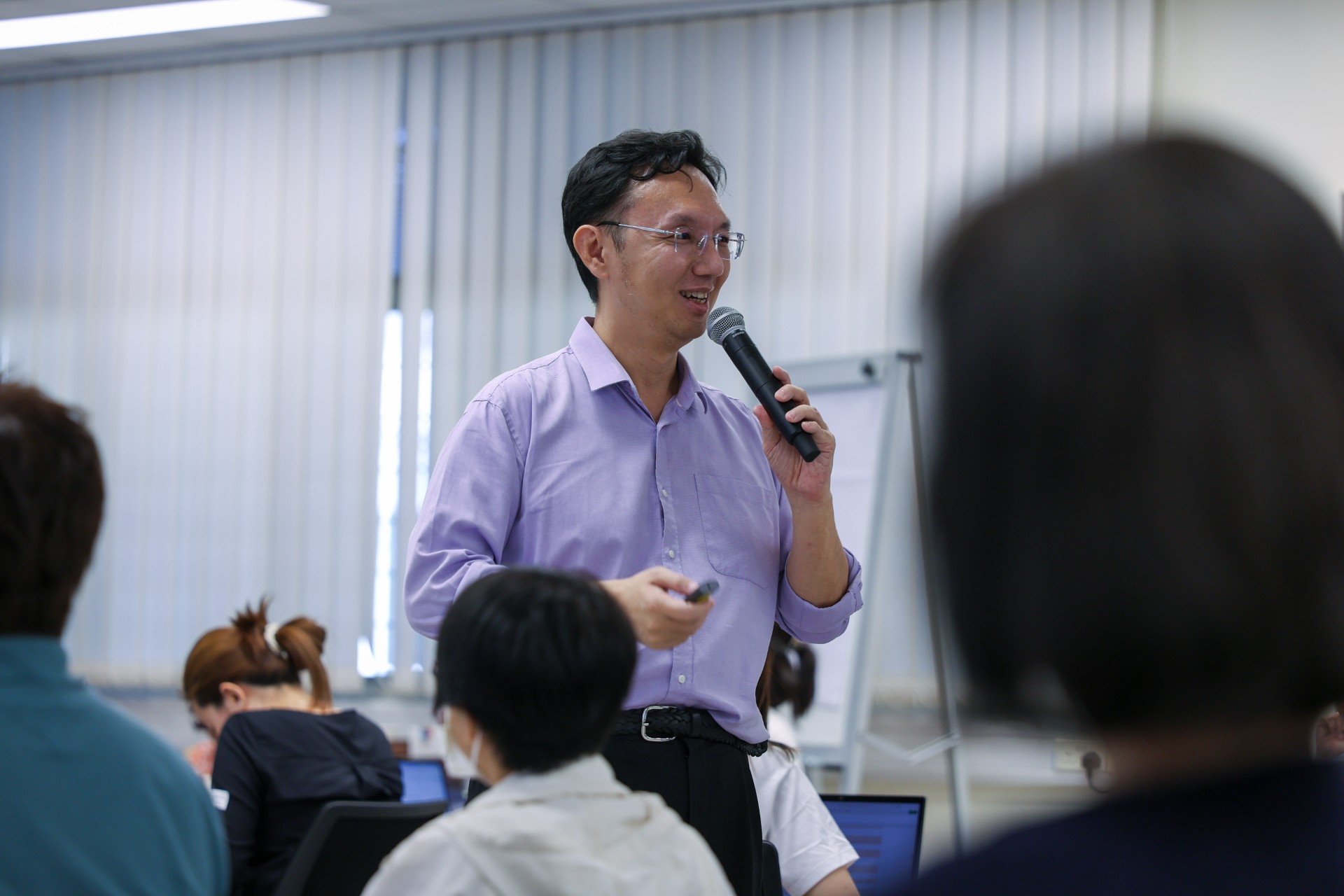
On 25 November 2026, Prof. Ben Leong, Director of AICET, spoke at River Valley High School's MMTL Retreat 2026. His talk, "Preparing our students for an AI-driven future", addressed four questions facing schools today: how AI and technology affect learning, whether students will still have jobs, what schools should teach, and how AI should be used.
Prof. Ben opened by making clear that he was not there to convince teachers to use AI in their teaching. Instead, he set out to examine what the evidence says, and what it means for the students in their classrooms.
AI, Technology and Learning
Prof. Ben began with the question of whether students should use generative AI tools such as ChatGPT. He pointed to a June 2026 study of 26,811 secondary school students in China, tracked over 30 months, which examined the effect of generative AI on learning. He also noted that a growing number of countries are introducing age restrictions on technology use, a sign that more technology is not always better for young learners.
At the centre of the discussion was cognitive offloading. Prof. Ben described an "AI chasm of death": the gap between novice and expert that students may never cross if AI does their thinking for them. He argued that this is not fundamentally a cognitive problem, but one of discipline and self-regulation.
Will Our Students Still Have Jobs?
On employment, Prof. Ben offered a measured view. Students need not fear AI itself, he said, but they face a larger challenge: global competition. Citing World Bank President Ajay Banga, he noted that around 1.2 billion young people in emerging markets will become eligible for work over the next 15 years, while those economies are projected to generate only about 400 million jobs.
The implication for Singapore is significant. Our students will not simply compete with average workers in lower-cost countries, but with the most capable people in those countries, enhanced by AI. Comparing youth unemployment figures in China and Singapore, Prof. Ben highlighted how quickly these pressures can affect young people entering the workforce.
What Should We Teach?
"In education, nothing is new," Prof. Ben observed. In a world described first as VUCA (Volatility, Uncertainty, Complexity, and Ambiguity) and now as BANI (brittle, anxious, non-linear and incomprehensible), the core task remains to teach students how to learn. He emphasised metacognition, asking the right questions, embracing ambiguity, handling failure and perspective taking as capabilities that will matter most.
He mapped skills along two dimensions: how well AI performs them, and how easily they can be taught and assessed. Skills that are easy to teach and assess, such as arithmetic and calculus, are also those AI does well. Human skills such as leadership, creativity, emotional intelligence and wisdom are harder to teach, but remain areas where AI is less capable. Prof. Ben acknowledged an open question for schools: how to balance academic results with these life skills, given the influence of national examinations on what happens in classrooms.
Using AI Well
On proper use of AI, Prof. Ben offered a simple framework. First, ask whether a task is something one actually needs to learn to do. Second, use AI for what one does not want to do, not for what one cannot do. He summarised the approach as: think first, use AI second, and reflect afterwards.
He also argued that real gains will come not from adding AI to existing workflows, but from reimagining learning and redesigning classrooms. Drawing on a leadership course he is teaching this semester, he shared examples of AI-powered role-plays for coaching and conflict management. These activities build in reflection and conclude with AI-generated feedback. "Anyone can build chatbots," he noted, but effective use requires sound pedagogy.
Prof. Ben cautioned that AI does not automatically make anyone a good teacher, and can make a weak teacher worse. AI is a force multiplier: in the hands of someone with good judgment it amplifies their strengths, while without judgment it produces low-quality output at scale. Left unchecked, widespread use of AI risks a convergence to mediocrity.
Education Is About Character
Prof. Ben closed by returning to the purpose of education: guiding students to lead good lives. He stressed the importance of character education and values, captured in the Chinese phrase 教书育人 (teaching knowledge and nurturing the person). He referenced a 1967 speech by Mr Lee Kuan Yew, which warned that without values, a literate generation could be more dangerous than an uneducated one.
His final message to the teachers was simple: teaching is about heart. The session concluded with a question-and-answer segment.
AICET thanks River Valley High School for the invitation and the opportunity to engage with its teachers.